


By TENA L. COOK, CSC MARKETING COORDINATOR
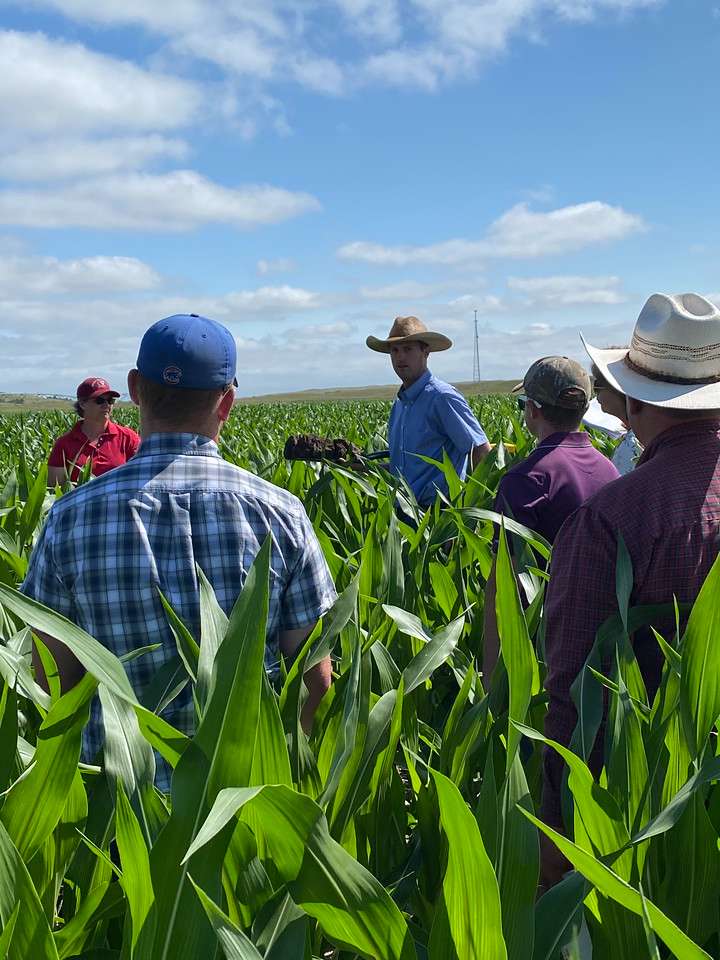
CHADRON – As the world observes the United Nations-designated International Year of Rangelands and Pastoralists in 2026, two alumni of Chadron State College say biodiversity, plant health, and conservation are essential to sustaining agriculture, ecosystems, and rural communities.
The international observance, championed by the late Dr. Jim O’Rourke a founder of CSC’s Rangeland Management program, recognizes the importance of rangelands and pastoral systems worldwide. Plant Health and Biodiversity highlights the role healthy ecosystems play in food production, environmental resilience, and long-term sustainability.
For 2006 alum Lance Schutte who is a Range and Forage Production Manager with the United States ARS Meat Animal Research at Clay Center, Nebraska, the connection between plant health and agricultural sustainability is part of his everyday work. He has previous experience with the Natural Resources Conservation Service and Wyoming Stock Growers Land Trust.
Schutte said his time at CSC introduced him to a wide range of ecosystems and encouraged him to consider environmental issues on a global scale rather than only a local one. He also became involved with organizations such as the Society for Range Management while attending CSC.
In his current work, Schutte manages grazing operations involving approximately 7,800 head of cattle. He said healthy plant communities are critical because grazing remains the most cost-effective way to feed livestock.
According to Schutte, biodiversity within grazing systems ensures livestock have access to forage throughout the growing season, reducing reliance on harvested feeds such as hay or ration. He said diverse forage systems also improve drought resilience and contribute to the long-term financial sustainability of ranching operations.
Another CSC alumnus, Aaron Hird, said his education at Chadron State prepared him to understand ecosystems far beyond Nebraska.
Hird attended CSC from 2002 to 2006, earning a bachelor’s degree in Environmental Biology with minors in Plant Sciences and Wildlife Management. He credited professors Dr. Georgia Younglove, Dr. Chuck Butterfield, and Dr. Ronald Weedon with exposing students to the broad scope of ecology, plant science, and wildlife management.
Hird said the extensive field work, laboratory experience, and interdisciplinary coursework taught him to remain curious, observant, and open-minded.
After graduating, Hird joined the USDA Natural Resources Conservation Service as a Rangeland Management Specialist in New Mexico following a college internship with the agency.
Although he initially questioned why CSC courses covered plants, animals, and ecosystems outside Nebraska, Hird said the value of that broad scientific foundation became immediately clear when he began working in the Southwest. He said he was already familiar with many of the grasses, shrubs, and forbs native to New Mexico despite never having visited the state before accepting the position.
Hird now serves as National Pastureland Assessment Leader for the Conservation Effects Assessment Project for Grazing Land at the National Soil Survey Center in Lincoln, Nebraska. His work focuses on measuring conservation outcomes and ecosystem services connected to pastureland conservation across the country.
He said resilient agricultural systems depend on healthy ecosystems and informed land managers. According to Hird, conservation not only improves land health, but also transfers knowledge and resources to producers and landowners.