


By Ashley Ahrens, Nebraska Extension Health and Wellbeing Educator
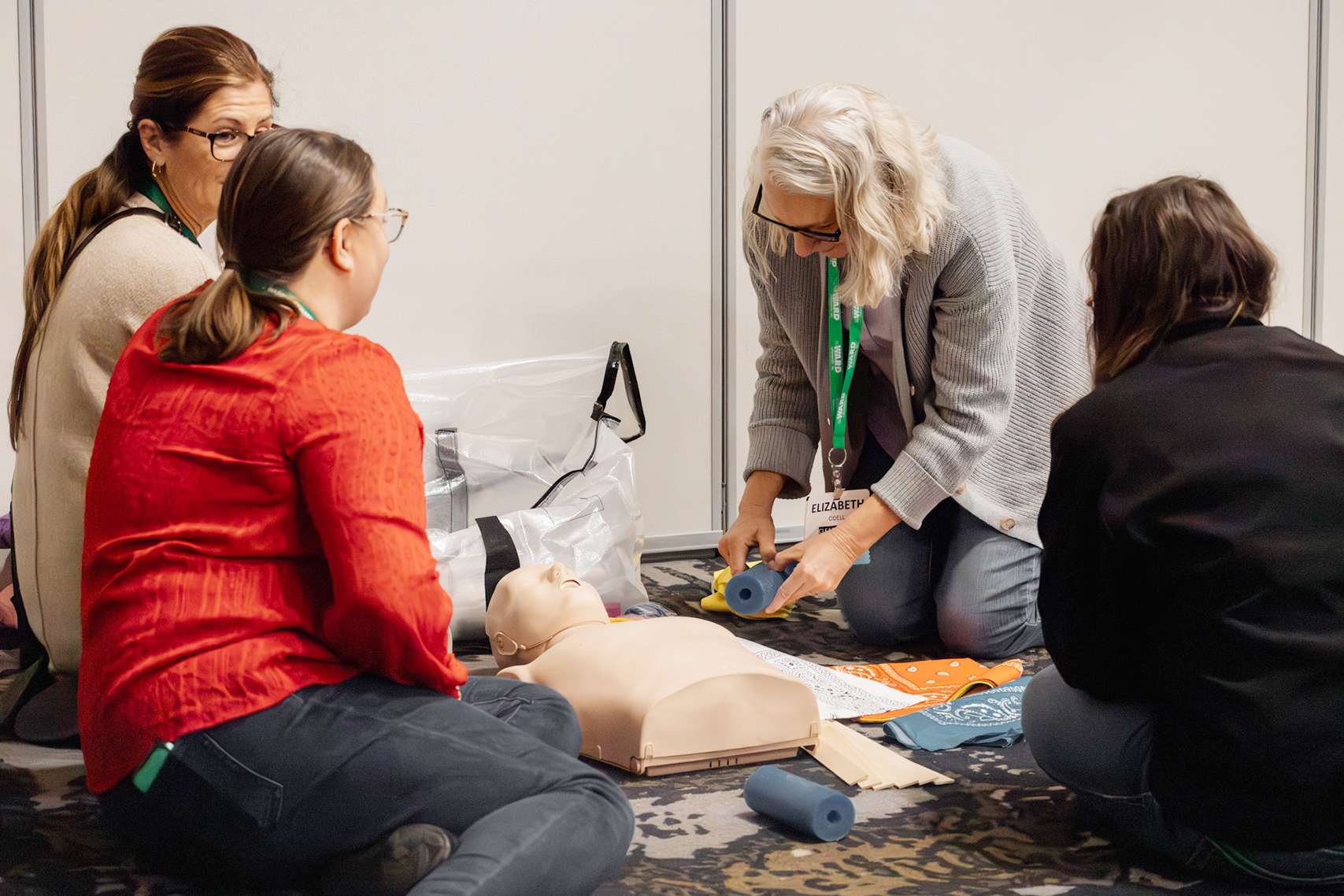
As participants entered the room for Rural Ready: First Aid for Ag Women, many took their seats with a mix of curiosity and uncertainty. Early in the session, they were asked to raise their hands if they had ever worked alone, experienced a near-miss, or wondered, “What would I do?” Nearly every hand went up.
That shared moment set the tone—this training was not hypothetical. It was personal.
Designed for women living and working in agricultural settings, this Nebraska Extension program focuses on practical, hands-on skills for real-life emergencies. In rural areas, where help may be miles away, the ability to respond in those first critical moments can make all the difference.
Throughout the workshop, participants moved quickly from listening to doing. In small groups, they practiced controlling severe bleeding using rolled gauze, towels and even their own body weight. Using pool noodle wound models, participants physically packed wounds and applied pressure—many for the first time.
The program’s “use what you have” approach resonated strongly. Instead of relying on ideal first aid kits, participants used materials familiar to their daily lives—bandanas, vet wrap, duct tape and towels. One participant shared that learning she could use her knee to maintain pressure in a severe bleeding situation changed how she would respond if she were alone.
During CPR practice, the room shifted again—from hesitation to determination. Participants coached one another on depth and speed, gaining a realistic understanding of the physical demands. Learning details such as placing a phone on speaker while calling 911 or that broken ribs can occur during effective CPR helped reduce fear and uncertainty.
In the splinting portion, participants worked together to stabilize injuries using paint stir sticks, pillows and wrap. A common realization emerged: their role is not to fix an injury, but to stabilize it safely until help arrives.
By the end of the session, the energy in the room had changed. What began as uncertainty had shifted to confidence and capability.
Evaluation data supported what was observed. Following the workshop, 100% of participants reported moderate to high confidence in recognizing emergencies and communicating with 911. Participants also reported increased confidence in controlling bleeding, performing CPR and stabilizing injuries. Nearly all agreed the hands-on format improved their learning.
Programs like Rural Ready demonstrate how Nebraska Extension meets communities where they are—providing practical, relevant education that supports real-life needs.
Because in rural Nebraska, preparedness isn’t about having perfect tools. It’s about being ready to act.