


By University of Nebraska Medical Center
This fall, UNMC will launch a new cross-disciplinary research center focused on how gestational exposures to toxic and pharmacologic agents affect fetal or early childhood neurodevelopment.
On Friday (April 24), the University of Nebraska Board of Regents approved creating the Research Center for Developmental Toxicology and Pharmacology. Pending approval by the Coordinating Commission for Postsecondary Education, the RCDToP will be administered by UNMC’s Department of Pharmacology and Experimental Neuroscience in the UNMC College of Medicine.
The RCDToP will bring together faculty expertise from the UNMC Colleges of Medicine, Pharmacy and Public Health; the Child Health Research Institute; and the Munroe-Meyer Institute, as well as faculty from other University of Nebraska campuses.
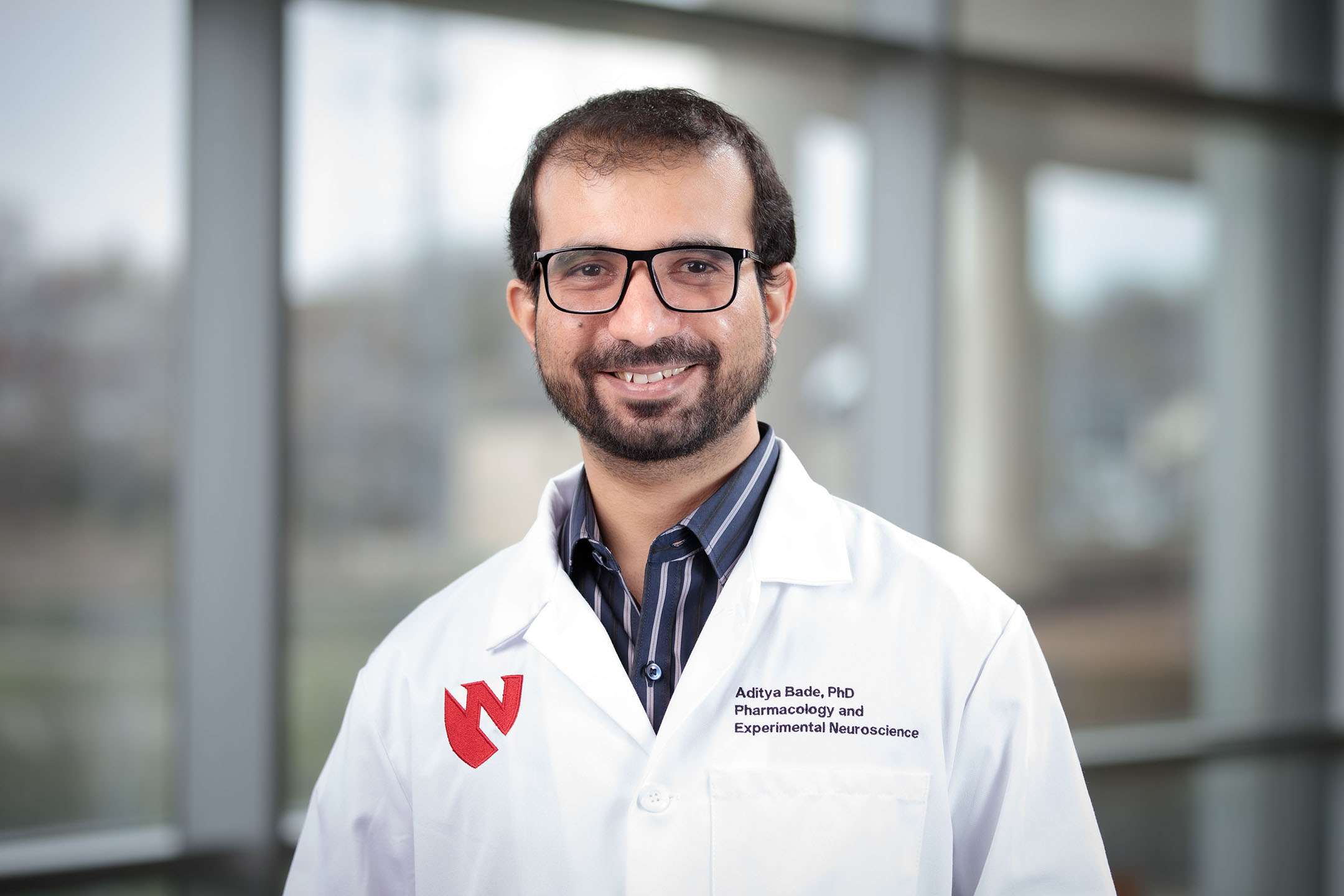
Under the leadership of Aditya Bade, PhD, assistant professor in the UNMC Department of Pharmacology and Experimental Neuroscience, the RCDToP will “advance knowledge, diagnosis, treatment and prevention of neurodevelopmental deficits associated with exposure to pharmacologic agents and environmental toxicants, including, but not limited to, prescription medications, illicit addictive substances and contaminants in air or water.”
“Neurodevelopmental disorders are broad in number and impact individuals across the age spectrum,” said UNMC College of Medicine Dean Bradley Britigan, MD. “The cause of most of these disorders is poorly understood and treatments are often non-existent or suboptimal. Understanding the pathogenesis of these disorders is critical to identifying means to treat and prevent them.”
UNMC Interim Chancellor H. Dele Davies, MD, said the center provides a unique opportunity. “The center will leverage existing institutional strengths and resources, advance collaboration across the NU system and enhance our competitiveness for extramural funding while addressing significant health needs in Nebraska and beyond,” he said. “UNMC is in an excellent position to advance our knowledge of neurodevelopmental disorders through this collaborative and interdisciplinary approach. I want to commend Dean Britigan and Dr. Bade on their leadership in bringing this vision forward.”
Initial funding support was provided by the UNMC College of Medicine, Child Health Research Institute (CHRI) and UNMC Department of Pharmacology and Experimental Neuroscience; no additional resources were needed to establish the center and leaders recognize that participating faculty have a strong history of obtaining extramural funding to support their work.
“Despite significant advances in biomedical science, critical knowledge gaps remain in understanding how specific pharmacologic or environmental agents contribute to neurodevelopmental and congenital disorders,” Dr. Bade said. “Furthermore, effective therapeutic and preventive strategies, as well as non-invasive diagnostic tools for early detection of developmental deficits, remain in their early stages of development.
“The RCDToP will address these challenges through a multidisciplinary, translational research framework, coupled with the development of premier education and training programs to cultivate the next generation of scientists. Through these integrated and collaborative efforts at UNMC and across the NU system, RCDToP will work to reduce the burden of drug- and environmental toxicant–induced neurodevelopmental disorders and, consequently, mitigate associated health care costs in Nebraska and beyond.”