


By Panhandle Public Health District
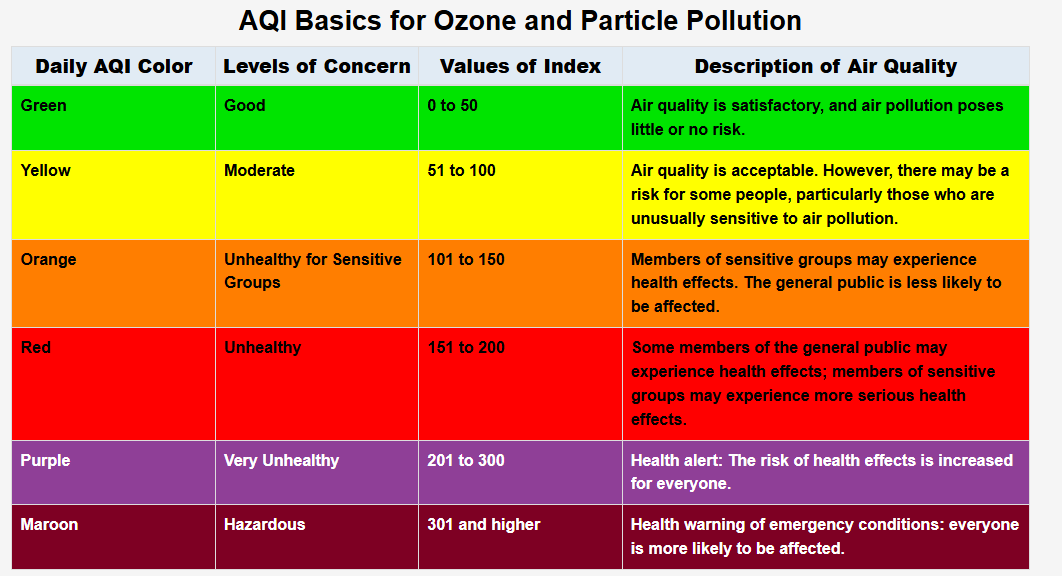
Due to the unfortunate recent wildfires, the Central and Southern Panhandle communities are experiencing air quality issues ranging from unhealthy to very unhealthy, as indicated by local air quality sensors. The air quality ratings are based on the Air Quality Index (AQI), which measures the concentration of pollutants such as particulate matter in the air.
When AQI readings are elevated, typically in the range of 101 to 150 or higher, it means the air is unhealthy for sensitive groups and can pose health risks for everyone. Community members are strongly encouraged to limit time outdoors and use air filtration whenever possible. The tips in this video will guide you to create a clean room in your home: https://youtu.be/V8DqzogXcVg.
“Air quality concerns during a fire event can add to an already hazardous situation. We want to empower residents to protect themselves and their loved ones in every way they can.” Megan Barhafer, Community Health Planner.
While poor air quality can make anyone sick, certain people are at greater risk for serious complications:
Children under 18 years of age
-Adults 65 years of age or older
-Pregnant women
-People with a history of smoking
-People with current respiratory illnesses, chronic lung disease (like asthma and COPD), diabetes (type 1 and 2), heart disease, and certain other long-term health conditions
-People who are unhoused or unsheltered due to increased exposure outdoors
Steps the Public Can Take to Protect Themselves and Others:
-Stay up to date on air quality
-Map.purpleair.com offers local health quality data
-Know your wildfire risk. Knowing your wildfire risk can help you to plan for a potentially poor air quality day. Prevent indoor pollution. Avoid or limit air fresheners, diffusing oils, candles, smoking or vaping indoors, broiling or frying foods, using gas or propane stoves, furnaces or heaters
-Stay with family or friends, if your indoor air quality cannot be maintained at a safe level
-Work with your doctor if you are sensitive to poor air quality so you can develop a safety plan
-Evacuate if necessary. Follow instructions from our local emergency management systems and evacuate if necessary