


By Tena L. Cook, Marketing Coordinator
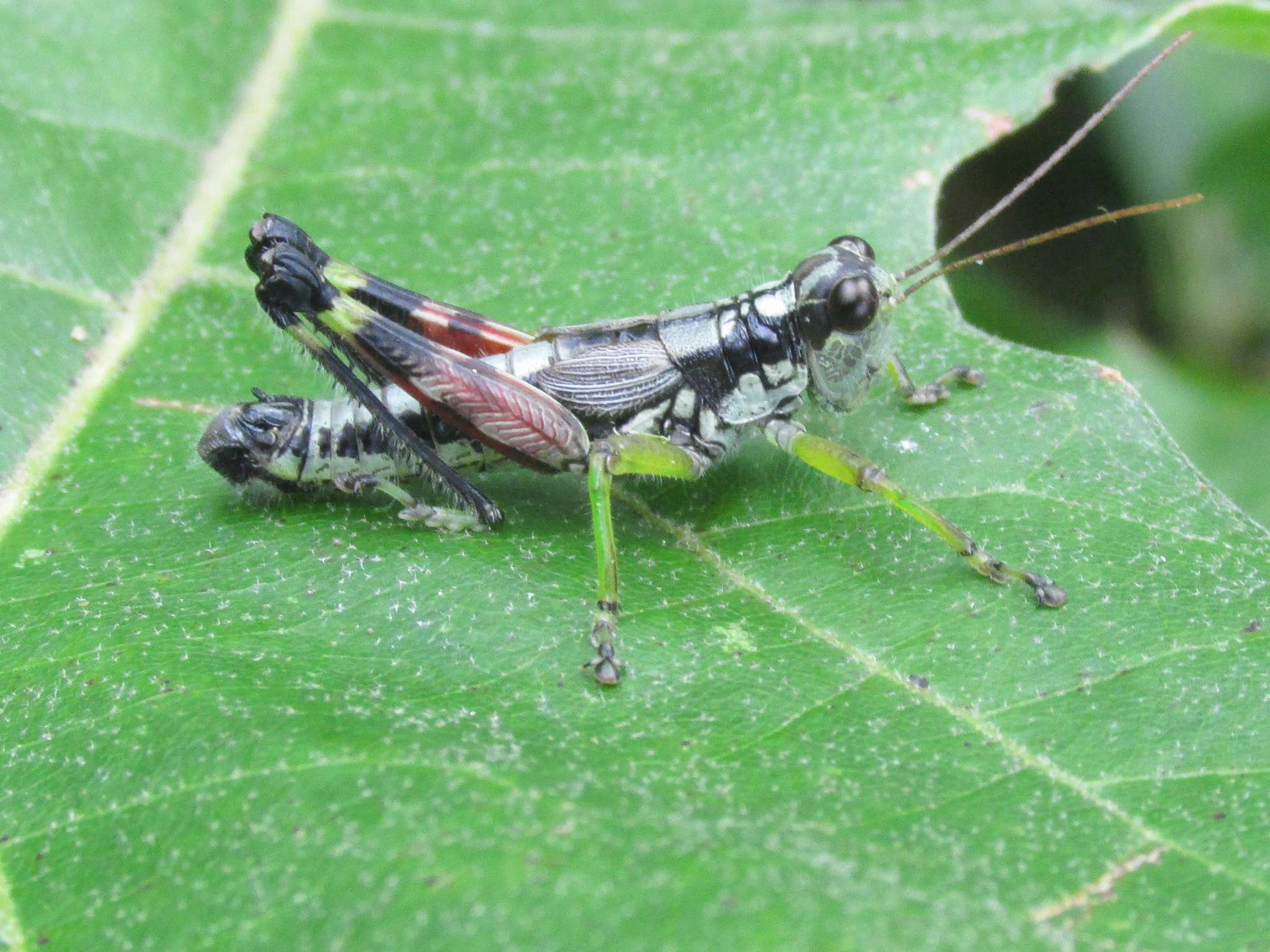
CHADRON, Neb. — A Chadron State College biologist’s work on grasshoppers in both Wisconsin and Nebraska is reshaping what scientists know about insect biodiversity in the Midwest and revealing how much remains undocumented.
Dr. Mathew Brust, a Professor and Department Chair of Biological Sciences at CSC, is the lead or co-author of two papers published last year and this year in the Journal of Orthoptera Research. The paper updating county-level distribution records for Wisconsin short-horned grasshoppers published newly accumulated records since the late Kathy Kirk and Charles Bomar co-authored the 2005 guide. Brust worked with both authors during his undergraduate employment as an assistant field biologist in Wisconsin. Bomar is listed as a co-author for many reasons including his previous work, according to Brust.
The other paper documents the rediscovery of a cold-adapted grasshopper species in Nebraska that had not been recorded in the state for more than a century.
Together, the studies highlight major gaps in insect data, the value of long-term fieldwork and collections and the importance of overlooked habitats such as wetlands and woodlands.
Brust said the Wisconsin project grew out of years of informal fieldwork during summer visits to his home state, combined with advances in community science.
“Although I haven’t lived in Wisconsin for over 20 years, I remain the grasshopper authority for the region,” Brust said. “I photograph and collect grasshoppers when I visit family each summer, and over time we accumulated a significant number of new county records.”
Working with graduate student Alex Harman, Brust compiled those records with observations from online platforms such as BugGuide and iNaturalist. Those sites, he said, have transformed biodiversity research by making thousands of verified insect observations publicly available.
The updated survey revealed dramatic increases in the number of recorded locations for several woodland and wetland grasshopper species.
“Woodlands and wetlands are often largely ignored in insect studies,” Brust said. “In some ways the results were surprising, but in others they weren’t.”
Brust’s long-term work in Nebraska played a key role in interpreting the Wisconsin data. The two states share more than half of their recorded grasshopper species, and Brust has spent two decades identifying specimens for both the CSC collection and the U.S. Department of Agriculture’s Animal and Plant Health Inspection Service.
That experience also fed into his second 2025 paper, which focuses on Melanoplus borealis, a grasshopper last recorded in Nebraska in the late 1800s. Brust and his co-author documented the species in multiple modern locations, confirming it still persists in the state.
Brust said his interest in the species began early in his career, when he was learning about Nebraska’s grasshoppers by collecting across the state.
“I quickly became familiar with most of the common species,” he said. “What interested me were the ones that were poorly known.”
Historical records suggested M. borealis was once widespread, despite few specimens ever being collected. Its disappearance from the scientific record for more than 100 years made the search both challenging and intriguing, Brust said.
The species is considered a glacial relict, meaning it is a remnant of colder climates that existed during the last Ice Age. As glaciers retreated and temperatures warmed, many cold-adapted species disappeared from the Great Plains. Others survived only in small pockets of cool habitat, such as fen wetlands and spring-fed creeks.
“These populations can be incredibly isolated,” Brust said. “Sometimes they occupy less than an acre.”
The rediscovery of M. borealis in multiple Nebraska counties suggests the species may be more widespread than previously thought, though Brust suspects many populations remain undocumented on private land.
He said small, isolated populations face growing risks. Climate change and land-use changes could threaten specialized species that depend on narrow habitat conditions, especially those with limited ability to disperse. Some M. borealis populations may consist of fewer than 50 individuals in a given year, making them vulnerable to local extinction, Brust said.
Despite their obscurity, Brust argues that grasshoppers like M. borealis matter.
“It’s easy to say, ‘It’s just a grasshopper,’ but that shows a lack of appreciation for biodiversity,” he said. “Nebraska alone has more than 100 grasshopper species, and only a small fraction are agricultural pests. These species interact with their environments in complex ways. They can teach us a great deal about the landscapes we live in, both past and present.”