


By Panhandle Public Health District
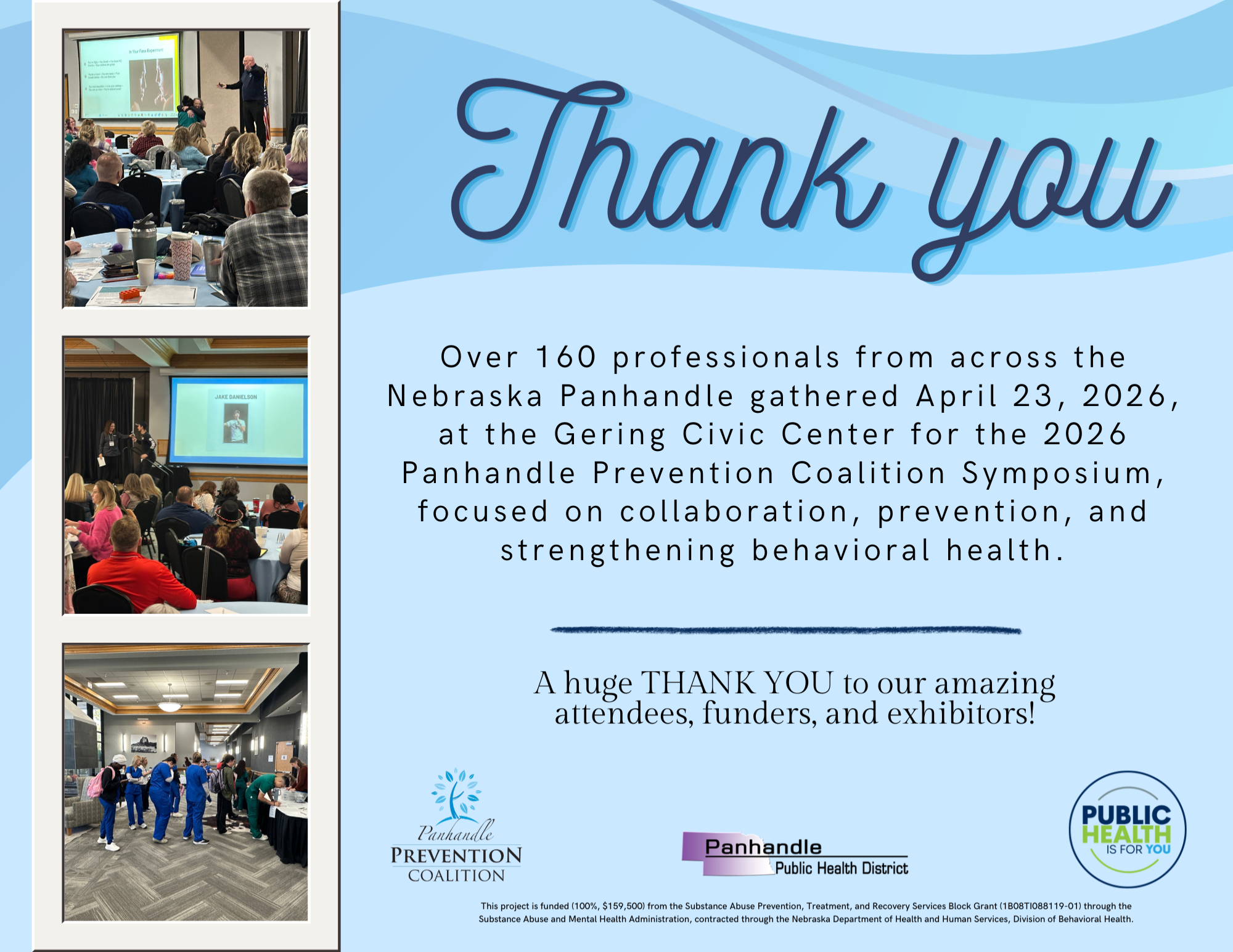
The Panhandle Prevention Coalition (PPC), proudly part of Panhandle Public Health District (PPHD), hosted the 2026 Prevention Symposium: United for Change – Strengthening Minds and Communities on April 23 at the Gering Civic Center. The event brought together over 160 attendees, exhibitors and partners from across the Nebraska Panhandle for a full day of learning, collaboration and community-driven prevention efforts.
“This level of participation reflects the growing commitment across our region to address mental health and substance use in meaningful ways,” said Suzanne Crane, Community Prevention Coordinator for PPHD. “When communities come together like this, real change becomes possible.”
A Day Centered on Resilience, Connection and Real Conversations
The symposium opened with Jay Martin delivering an engaging session on the Impact of Social Media on Youth, providing insight into how digital environments influence mental health and behavior. He stated, “Digital wisdom and resiliency start with finding digital engagement that supports youth well-being.”
Followed by Jake Danielson, a nationally recognized mental health and wellness speaker, who delivered a powerful message on vulnerability and personal growth. Danielson shared, “Vulnerability is a superpower.”
Youth voices were also a meaningful part of the day. Kaitlyn Shannon shared her experience and advocacy through the Miss America organization, emphasizing the importance of visibility and representation in mental health. As she stated, “Competing in the Miss America Organization gave me a voice and a platform. Her platform named Break the Stigma exists because I believe representation saves lives. You can make a difference—mental health matters.”
Kristine Benda highlighted the importance of connection and awareness among youth, sharing a powerful reflection from a student: “Letting them know that you're there, that they’re cared for and that someone notices them—I think that’s a big thing.”
Addressing Substance Use Trends and Policy Awareness
Justin S. Dillard, Assistant Special Agent in Charge with the DEA Omaha Field Division, presented on current drug trends, offering a critical look at substances impacting communities across the region. He emphasized the urgency of prevention efforts, stating, “The drug threat is real. There is nothing more important than protecting our youth and having those hard discussions.”
The Nebraska Attorney General’s Office provided an overview of medical marijuana in Nebraska, helping attendees better understand the legal landscape and its implications for prevention and community health.
Healing Through Connection and Community Response
Miranda Stoll delivered a compelling session on the importance of connection in addressing addiction and mental health challenges. As she shared, “Connection isn't built in comfort. It's built in the conversations we're afraid to have. When we learn to have these conversations, we change the trajectory of the entire community, hopefully leading to a much larger impact globally.”
The day concluded with Jim Cowser, who highlighted the role of community-based care and the impact of the Regional Crisis Stabilization Unit in Kimball. He emphasized the shared responsibility in supporting those in need, stating, “We hurt as a community when people with mental health and substance use issues hurt. Healing also is a community effort. We are grateful to be a part of this caring community.”
Community Engagement and Collaboration
In addition to the presentations, attendees had the opportunity to explore the Hidden in Plain Sight exhibit, an interactive display designed to educate individuals on hidden signs of substance use.
The Panhandle Prevention Coalition also extends appreciation to its exhibitors and the Drug Enforcement Administration for their participation and support in making the event a success.
Recognizing Support and Partnerships
This event was made possible through the support of Region 1 Behavioral Health and the Nebraska Department of Health and Human Services, Division of Behavioral Health.
“These partnerships are essential,” Crane added. “Prevention work requires collaboration at every level, and we are grateful for the continued support that allows us to bring opportunities like this to our communities.”
For more information about the symposium, contact Suzanne Crane, Community Prevention Coordinator, at scrane@pphd.ne.gov, or 308-672-9800.
Panhandle Public Health District is working together to improve the health, safety and quality of life for all who live, learn, work and play in the Panhandle. Our vision is that we are a healthier and safer Panhandle community.
This project is funded (100 percent, $159,500) from the Substance Abuse Prevention, Treatment and Recovery Services Block Grant (1B08TI088119-01) through the Substance Abuse and Mental Health Services Administration, contracted through the Nebraska Department of Health and Human Services, Division of Behavioral Health.