


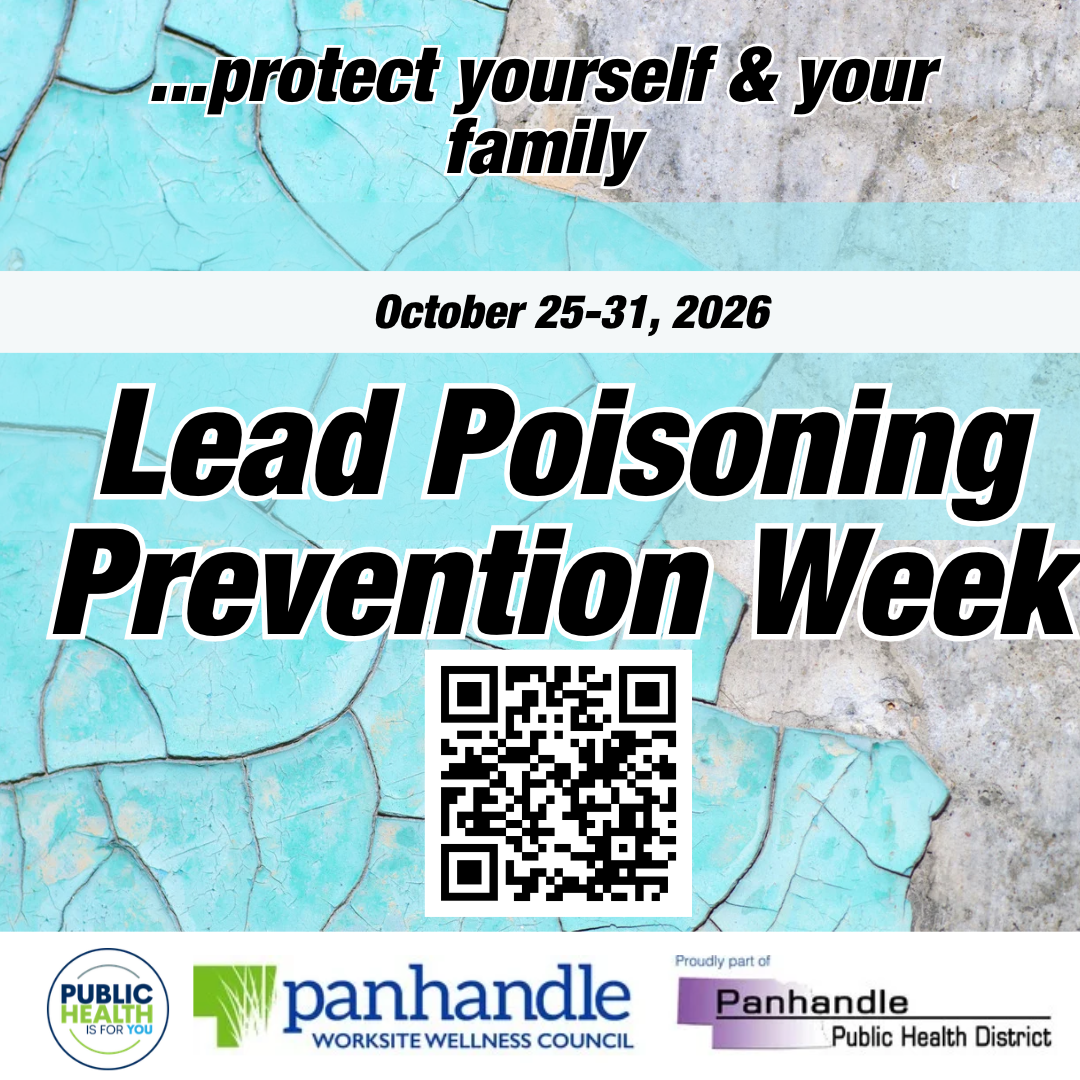
Make sure to mark your calendars this year starting October 25th to celebrate National Lead Poisoning Prevention Week (NLPPW). Every year, National Lead Poisoning Prevention Week serves as a way to bring together individuals, organizations, industry, and Tribal, state and local governments to reduce childhood exposure to lead by increasing lead poisoning prevention awareness.
If you are concerned about your child’s blood lead level, Panhandle Public Health District (PPHD) offers free blood lead testing for children year-round. Families can call 308-633-2866 to schedule an appointment. In addition, you can bring in items from your home that may contain lead, such as toys, spices, tools, or clothing, to be tested for the presence of lead. Early detection can help identify lead hazards and protect your child’s health.
This year’s theme for NLPPW, “Keep Kids Safe from Lead,” highlights that every American should have a safe and healthy home:
· Get the facts: Lead is still a problem in many communities. Learning about lead exposure and lead hazards can help protect you and your family.
· Get your child tested: A blood test is the best way to find out if your child has lead poisoning. Talk to your child’s healthcare provider about getting a blood lead test if your child may have been exposed to lead.
· Get your home tested: Minimize your risk of lead exposure by hiring a certified professional to test your home for lead if it was built before 1978.
Lead poisoning occurs when lead builds up in the body, often over months or years. Even small amounts of lead can cause serious health problems. Children younger than 6 years are especially vulnerable to lead poisoning, which can severely affect mental and physical development.
Lead-based paint and lead-contaminated dust in older buildings, especially homes built before 1978, are common sources of lead poisoning in children. Other sources include contaminated air, water, and soil. Adults who work with batteries, do home renovations or work in auto repair shops also might be exposed to lead.
Understanding lead’s dangers and sources is the first step in protecting your family. Lead is highly toxic, especially to developing minds and bodies. Even small amounts can potentially cause:
- Delayed growth and development
- Lower IQ and learning difficulties
- Brain and nervous system damage
- Hearing, speech, and behavorial problems
Panhandle Public Health District has three state licensed Lead Abatement Risk Assessors on staff who can test your home for the presence of lead-based paint. PPHD can also check blood lead levels in children, pregnant women, or those who suspect they may have had a lead exposure.
If you and are interested in having your house tested for lead, or would like your child’s blood lead level checked, please contact Kendra Lauruhn at klauruhn@pphd.ne.gov, or call 308-633-2866 ext. 206 to set up appointments.
Panhandle Public Health District is working together to improve the health, safety and quality of life for all who live, learn, work and play in the Panhandle. Our vision is that we are a healthier and safer Panhandle community.
Sources:
https://www.epa.gov/lead/national-lead-poisoning-prevention-week