


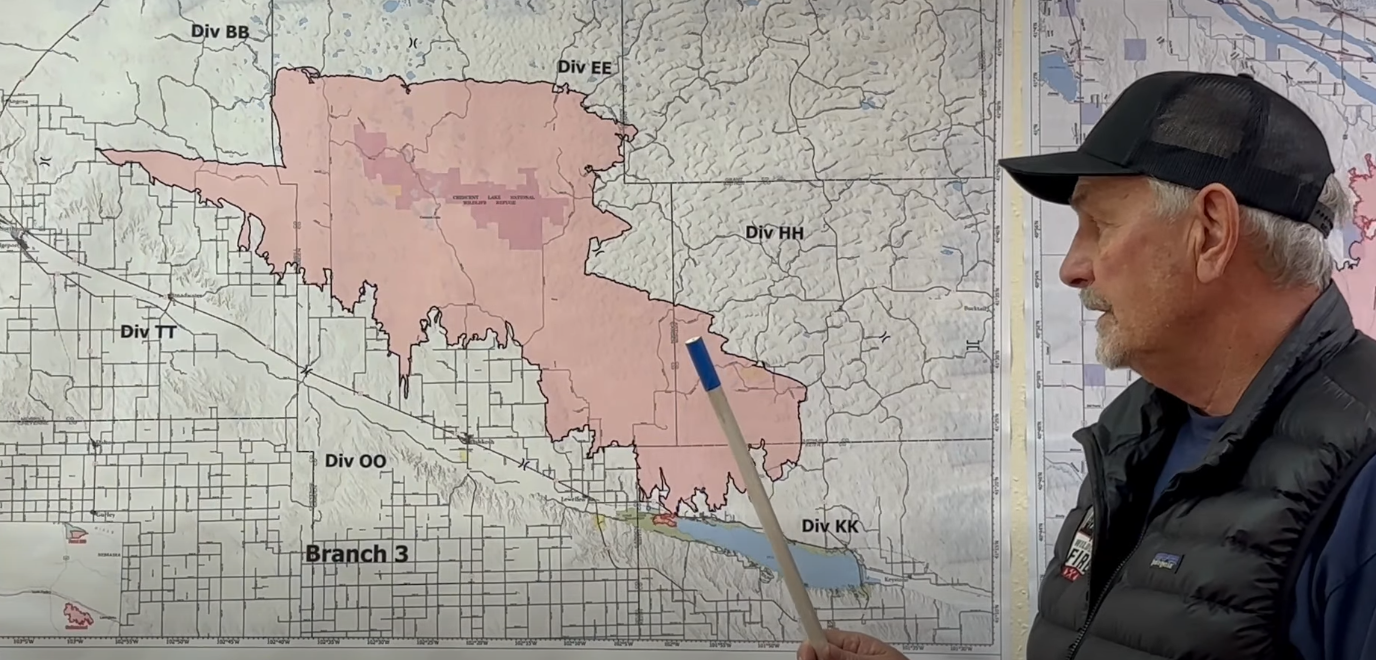
Firefighters are nearing full containment on the Morrill Fire as crews continue monitoring lingering heat and preparing for dangerous fire weather conditions in the coming days.
In a Friday update, Rocky Mountain Complex Incident Management Team 1 Operations Section Chief Rob Powell said the Morrill Fire is now 98% contained, with only a small pocket of heat remaining in a dense cottonwood stand within a natural area.
“We’ve got a black edge all the way around the fire except for this little bit of heat,” Powell said. “We do have like 200 feet all the way around that bopped up, but to go farther in interior it’s just a little bit too dangerous for our folks.”
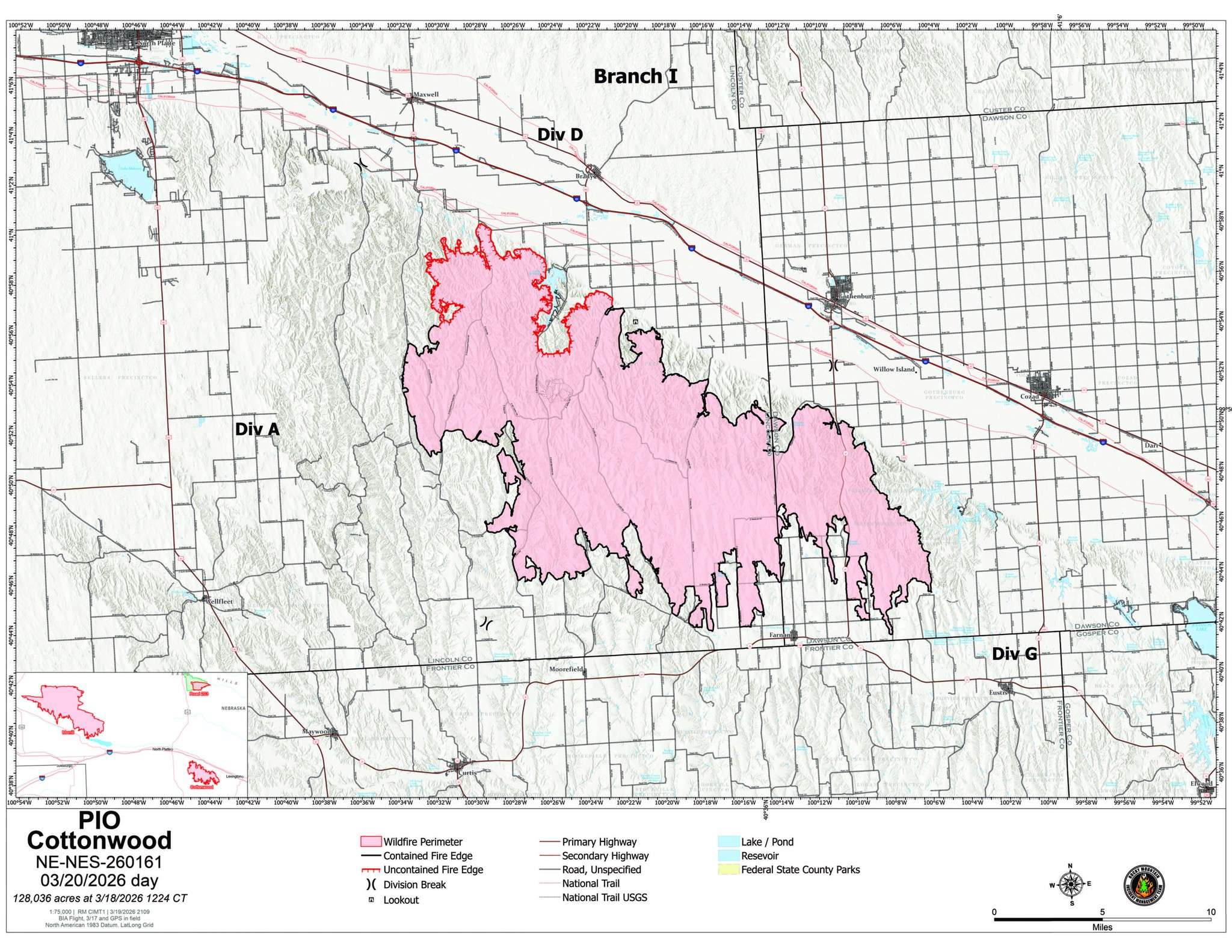
Powell explained that the remaining heat is located in an area with burned cottonwood trees, where the risk of falling snags makes it unsafe for crews to fully engage.
“We’ll continue to see smoke in there, heat in there for a long time,” he said. “We feel real confident about that, that it’s not going to come out.”
If fire activity increases in that area, helicopters could be used to cool it down, but Powell emphasized that aerial drops are only part of the process.
“Water doesn’t put fires out. You’ve got to have people on the ground to follow up those drops to kind of enhance that and dig it around and stir it,” he said.
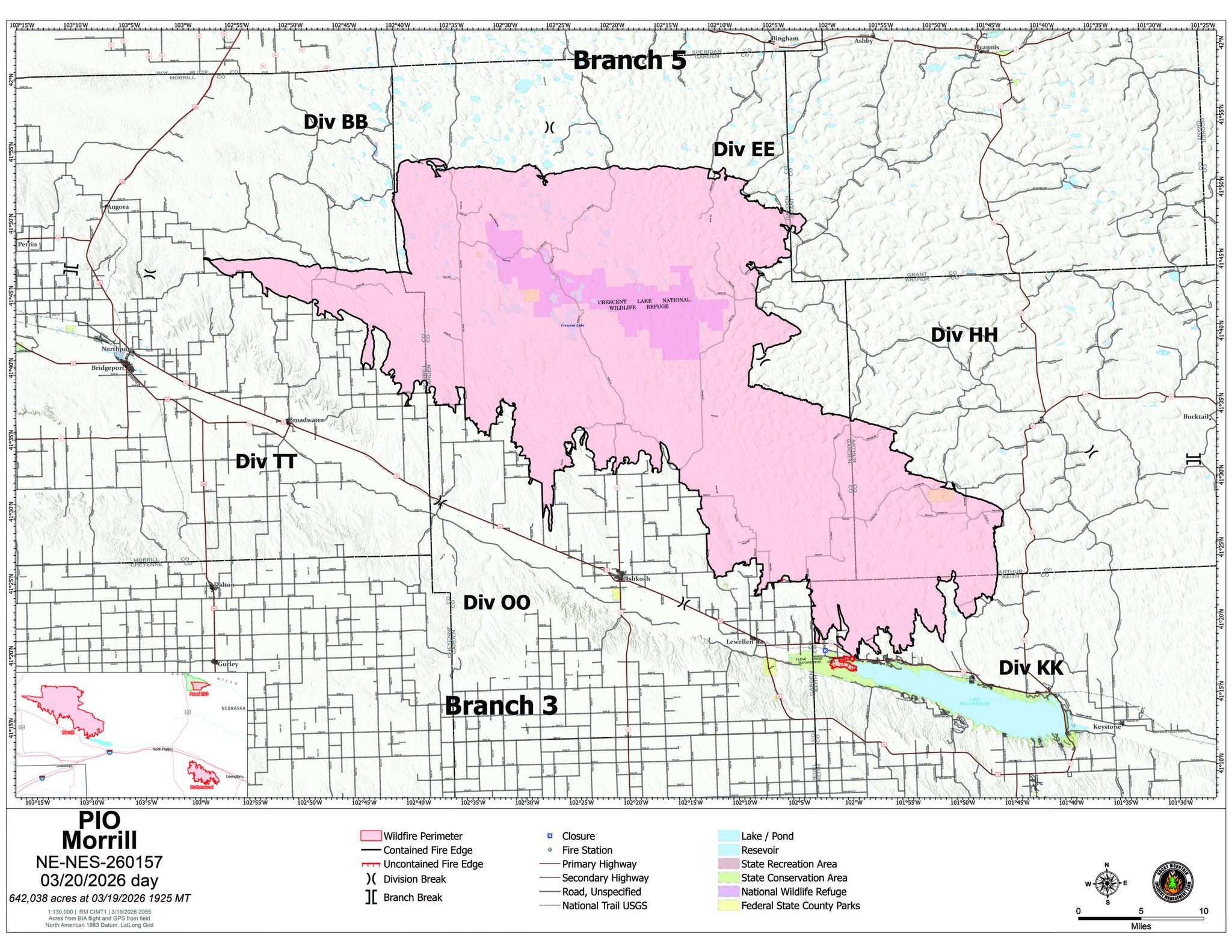
As containment has increased, fire managers have begun repositioning resources to prepare for potential new fires. Crews have been staged in Oshkosh and Keystone as part of initial attack teams that can respond quickly across the region.
“The reason we did that is because the next couple days… we’re seeing a pretty dang good uptick on fire burning conditions,” Powell said. “If the state of Nebraska needs some help… we have a task force of IA resources that will be able to respond.”
Powell said those initial attack crews are ready to assist local volunteer departments anywhere in the state if new fires start.
He also addressed questions from the public about ongoing smoke and flare-ups within fire perimeters, noting that interior pockets of fuel—especially cedar stands—continue to burn.
“When you get some sun and heat and a little bit of wind on it, they’ll come in and go into those cedar pockets… and then you’ll see torching and a column build up,” he said.
Powell added that not all vegetation within the fire area was completely consumed.
“They were all not nuked… there’s still cedars out there that will survive this fire, but there’s a significant amount,” he said.
Looking ahead, officials are closely watching weather conditions that could increase fire danger. Powell warned of expected Red Flag conditions and the potential for rapidly changing winds.
“We’re going to have red flag probably for sure tomorrow,” he said, adding that conditions could mirror those seen when the fire first started. “We’ll get sustained winds… and sometime Saturday night, a 90-degree shift.”
Powell also emphasized the importance of firefighter safety, explaining the protocols crews follow before engaging any fire activity.
“We don’t engage until we have a couple things established,” he said. “We have lookouts, we have communications established, we’ve identified places of escape routes… and then safety zones.”
He said accountability is a top priority, with detailed daily plans tracking where crews are working and who they are assigned to.
“We make sure we know where these people are at and who’s working for who,” Powell said.
With hot, dry conditions expected to continue, fire officials warn that any new fire start could quickly become dangerous, even as containment on the Morrill Fire nears completion.