


By TENA L. COOK, CSC MARKETING COORDINATOR
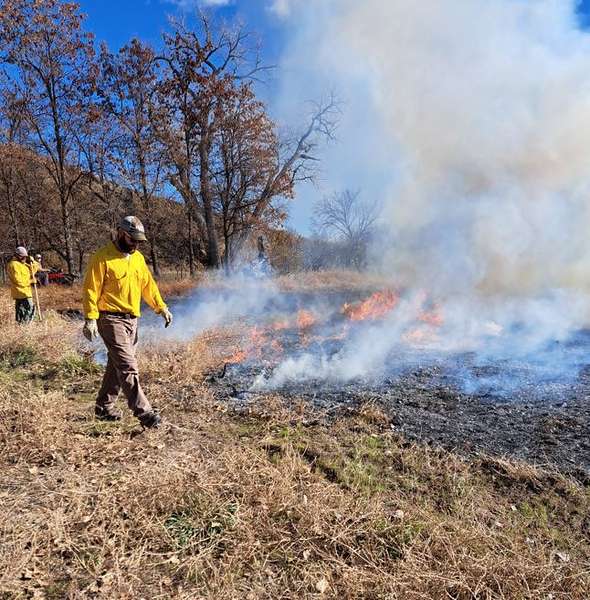
CHADRON – Chadron State College is preparing the next generation of land managers to meet the growing challenges of wildfire and prescribed fire through a new Rangeland Fire Management degree option.
According to Dr. Anthony Perlinski, professor and chair of the Department of Rangeland Management, the curriculum will help CSC students understand both wildfire and prescribed fire, emphasizing that each plays a different role in managing rangeland ecosystems.
The new degree option combines fire ecology, fire behavior, and prescribed burning with the college's established curriculum in natural resource management, giving graduates the skills to manage fire as a natural process and as a range management device.
A gift from the Bill and Virginia Coffee Family Foundation helped make the new option possible by funding a mobile unit that students will use during field instruction.
“The Coffee Family Foundation provided the support to create a mobile burn unit that will nearly completely outfit a class full of students to go to the field and conduct a prescribed fire,” said Perlinski. “Students will now gain experience with the same equipment they'll be using after graduation as land managers and fire professionals.”
Perlinski said the Coffee Family Foundation has long supported CSC students, prospective rangeland management students, and regional research and outreach activities.
“[The Coffee Family Foundation’s] continued support of the department over the years has had a significant impact on countless students,” he said.
Although recent wildfire seasons have underscored the need for trained fire professionals, Perlinski said the new degree option grew primarily from student interest.
“Incoming and current students have a desire to learn about fire ecology and science and develop their skills to work in both wildland and prescribed fire environments,” he said. “Wildfires have caused a significant impact in Nebraska this year and will continue. It's important that students understand how wildfires affect ecosystems, and that begins with understanding fire behavior.”
Additionally, Perlinski said prescribed fire has become an increasingly valuable management practice for ranchers and land managers facing woody plant encroachment across the Great Plains.
“One of the most significant threats to grassland ecosystems right now is woody plant encroachment, primarily eastern red cedar,” Perlinski said. “One of the best tools we have to combat that is prescribed fire.”
Beyond slowing the spread of invasive woody plants, prescribed burning improves forage production, enhances wildlife habitat and reduces the buildup of fuels that can contribute to catastrophic wildfires, according to Perlinski.
Unlike many other fire degree programs, CSC's option integrates fire science with the study of soils, livestock production, watershed management and wildlife management alongside fire ecology, allowing them to understand how prescribed fire influences an entire landscape.
“We want students to make connections between fire and all the other components of land management,” Perlinski said.
Hands-on experience is a central component of the program. Students will train with fire equipment, develop burn plans and, when weather conditions allow, conduct prescribed burns.
“We're at the mercy of the weather,” Perlinski said. “One of the challenges of prescribed fire in our region is that we only get a few good burn days each year, and with a warming and drying climate, we're seeing fewer days that meet the appropriate prescription.”
Historically, CSC students have gained prescribed fire experience on regional ranches, and Perlinski expects similar opportunities to continue whenever conditions are favorable.
Graduates will be prepared for careers with agencies such as the U.S. Forest Service and the Bureau of Land Management, where CSC students already serve in fuels reduction and wildland fire suppression positions.
Looking ahead, Perlinski hopes the program will continue to grow while strengthening CSC's partnership with the U.S. Forest Service.
“I'm hoping to bring in as much of their input and expertise as possible as we grow the program,” he said. “Working with the agency, we can refine the curriculum in a way that benefits both the agency and Chadron State College.”