


By Chabella Guzman, PREEC Communications
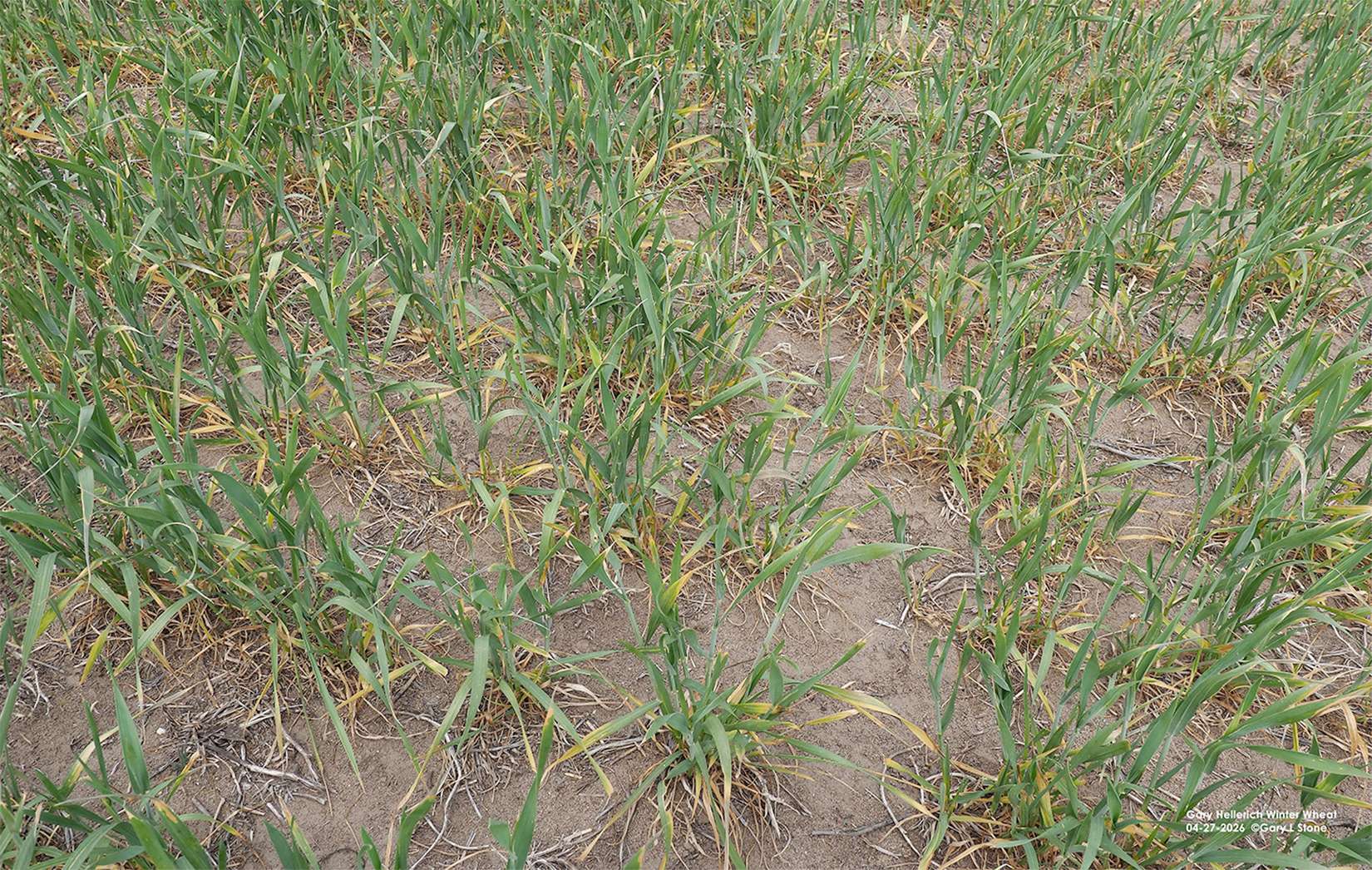
Wheat has had a tough season. Planting in the fall of 2025 started in a drought, with little rain and almost no snow. Wheat remained under stress with a warm winter that never got cold enough to send some varieties into dormancy.
“This has been the worst year I've seen since I started in this role in 2018. And we've seen some pretty gnarly years,” said Amanda Easterly, Nebraska Extension dryland cropping specialist.
Late winter saw the wheat experience warm weather more typical of spring. Then in April, a series of intermittent freezes saw temperatures drop as low as 20 degrees in some areas for prolonged periods.
“It had been warm, and then it started freezing during that critical time of boot and heading in wheat,” she said. Again, the wheat crop was early by several weeks, compared to when wheat usually boots and heads, because of the drought and the stress it was trying to push through that life cycle. About 10 days after the freeze events, the wheat began to yellow, and it was apparent that the kernels wouldn’t form.
The High Plains Ag Lab (HPAL) will likely lose many of its fields, which may be zeroed out by crop insurance, particularly on cooperator fields. The site in Scotts Bluff County has already been terminated after the irrigation district decided to delay irrigation until July. Across Nebraska, sites around Perkins and Lincoln County are rough, but may be salvageable. Gosper, Keith and Clay Counties are drought-impacted but have seen less freezing, and Clay County has the option of rescue irrigation and has received some good rains over the past couple of weeks. Jefferson, Lancaster and Washington Counties are likely to go to harvest and have also received spring rains.
“Producers should plan for planting now. I think that we're going to see some trickle-down effects because wheat crops from here, all the way to Texas, are majorly impaired, if not totally gone. So I am anticipating that seed availability may be a challenge,” Easterly said.
She advised growers to think ahead, as wheat variety selections may be limited. HPAL gathers wheat results in multi-year averages and multi-location summaries. The reports use the “Least Significant Difference” (LSD) to identify which varieties are performing similarly from a statistical standpoint.
“So a grower might say, I can't get my first choice, I can't get my second choice. Maybe my third choice is what's available,” she said. “They can be comforted by the fact that it tends to do just about as well as what their top choice does.”
In addition to seed availability, growers should consider agronomics for next year. Reports of wheat streak mosaic virus are not being reported, but there could still be pressure later. Growers need to ensure they control volunteer wheat, whether the field is to be harvested or terminated.
“We are hearing some reports from Colorado about Russian wheat aphid, and we haven't seen Russian wheat aphid in a while. So, looking back at how we scout for those insect pests and the economic thresholds to manage them, it's probably something else to have in the back of your mind,” she said.
The 2026 Wheat Variety Tour is held every year in June. This year, Easterly anticipates losing a handful of sites and possibly pivoting to a different sort of event. While the tour stop in Fairbury/Jefferson County will be as planned, the further west the tour goes, it will depend.
“We'll probably try to find something to engage with growers and answer questions. And be there as a resource as well as a chance for everyone to just get together,” Easterly said
For more information on the freeze and wheat, visit https://cropwatch.unl.edu/assessing-freeze-injury-wheat/
For updates on the Wheat Variety Tour, visit https://preec.unl.edu/2026-wheat-variety-tours/