


By John E. Weare
ALLIANCE, Neb. - Keep America Beautiful’s 2026 National Litter Study not only counts litter throughout America it shows what we throw away. Cigarette butts still take the top prize among the approximately 35 billion pieces of litter (along the roadways and waterways that is) counted as cardboard has increased by 50 percent since 2020.
As far as I know, Box Butte County, and Alliance in particular, was not one of the 700 randomly selected sites. Litter is easy to find, however, when hoping for something else. Recently, I arrived on time to load several bags of recycling. Nobody was there. I later went back to the text message and found I parked on the wrong side of the building. There was no call that afternoon, so I hope the recycling made its way down to the Keep Alliance Beautiful Recycling Center.
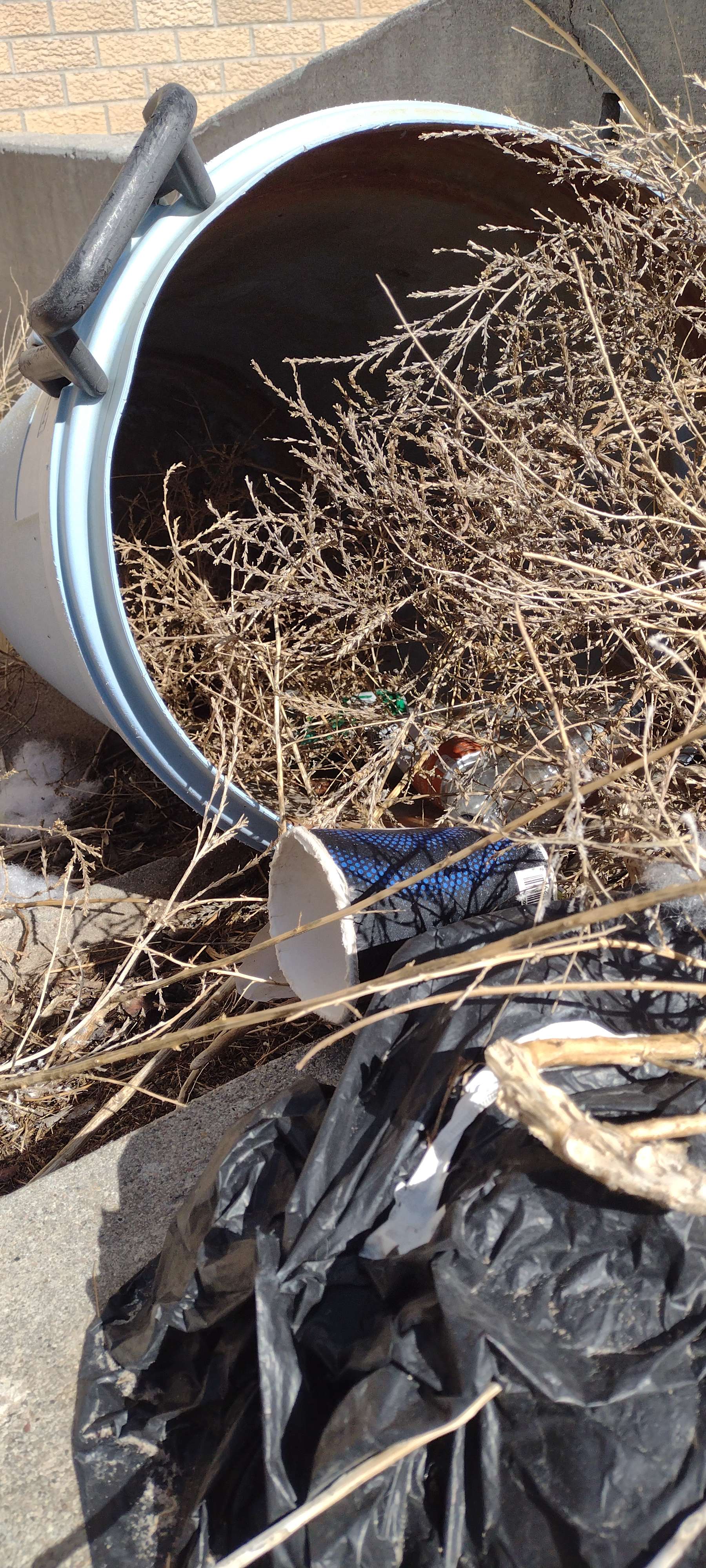
A worn blue trash can in a pile of tumble weeds caught my attention as I waited for the bags – so I spent a few minutes gathering weeks (months?) of forgotten litter in the can. With the receptacle by the door I did one last lap around the building to check for bags and called it a day.
Nearly all the litter at the site mentioned above was of the less than 4-inch variety. The Study says 84 percent of all litter fits that category, with 88 percent along roadways. Small items, and shreds of what were large items, take longer to pick up with a slow pace and keen eye, a must for a successful cleanup. Though large litter, such as cardboard and debris from vehicles (including tires and treads) are up, 36 percent for the latter, almost all categories decreased.
Among the study’s “most frequently litter products” the declines are encouraging: Plastics 24 percent, paper 45 percent, glass 34 percent, metal 30 percent, organics 77 percent and smoking and tobacco products 60 percent.
Keep America Beautiful President and CEO Jenny Lawson brought a panel of experts on stage to dissect the study during the organization’s New Orleans Summit earlier this year. The speakers were: Veronica Roof, Esq., Solid Waste Planning Practice lead, HDR Engineering, Inc.; Wendy Salomon, managing director, The Harris Poll; and Dr. David Scott, senior vice president, Impact and Analytics with Keep America Beautiful.
“There is no silver bullet,” Lawson admitted to the packed ballroom. “We’re making it easier to do the right thing. At the same time, litter remains a challenge. Research gives us clarity on where to focus next.”
Scott spoke to the education component, saying that they will spend the next year generating knowledge and support. He emphasized, to open the question and answer session among the group on stage, “When you look at the full study tube biggest take a way – progress.” Roof said, “If we don’t look at places that are more difficult” we won’t control litter. Lawson countered, “How do we double-down on those areas?” Scott pointed out that “an awful lot” of litter is unintentional. That is true, yet to remove those foreign pieces of plastic and everything else only intentional people will do. Roof said first impressions are key to long-term action. “So many times we have that first-time volunteer come out.”
Considering how to keep our county and communities clean, I agree with the Study’s Summary Report: (Page 3) As the Study makes clear, progress is possible but not guaranteed. Sustaining and accelerating that progress will require continued attention to the systems, behaviors and conditions that influence how litter is generated, managed and prevented.